Cochrane Swim Lessons
SLS Centre offers swim lessons for all ages and abilities! Browse this page to see all our offerings, and what skills are required for each level and program. Winter Programs now visible.
Lifesaving Society's "Swim For Life"SLS Centre offers Swim Lessons from ages four months to adults with the Lifesaving Society, 'Swim For Life' learn to swim and lifesaving programs.
Cochrane Swim Lessons
- Adapted Aquatic Therapy
- Learn more and register
Child/Adult Adapted Aquatic Therapy - Winter 2026
18 and up"This play-based aquatic therapy class, led by a Certified WATSU Therapist, helps participants with a diagnosed disability improve balance, strength, communication, and motor skills. A caregiver/aide (able to swim) joins in the pool to support individual goals using specialized equipment."
- Adult Swimmer
- Learn more and register
Adult Swimmer 1/2/3
At least 13 but less than 99 ADULT SWIMMER | 13+ YEARSThe Adult Swimmer program helps beginners or those improving strokes achieve their goals. With a certified instructor, participants gain confidence, develop smooth strokes, improve water fitness, and learn Water Smart® safety. Skills and awards are adapted for adult learners’ needs and personal goals.Progression through this program is based on completion of skills at each level.ADULT 1Adult swimmers will work towards being able to complete short distance swims (10-15 m) on their front and back. They will work through swimming stroke fundamentals such as floats, rolls, glides, and kicks. Swimmers will develop their underwater skills as they continue to build their confidence in the water. ADULT 2Adult swimmers will practice different entries into deep water including dives, rolls, and tuck jumps (cannonballs). As they work on building strength and endurance, they will aim to be able to tread water for 1-2 minutes. New underwater skills are introduced such as handstands in shallow water and front somersaults (in water). Swimmers will achieve the Swim to Survive standard by being able to roll into deep water, tread water for 1 minute, and swim 50m. In addition to improving their front crawl, back crawl, and whip kick, swimmers will be introduced to breaststroke. ADULT 3Adult swimmers will work towards mastering front crawl, back crawl, and breaststroke. Challenging skills such as shallow dives, stride entries, and compact jumps will be completed as well as a focus on developing lifesaving kicks. Swimmers can expect to improve their fitness levels as they work on completing 300m workouts and 25-50 m sprints.Next Steps: Profession -> Bronze Star, Bronze Medallion, Bronze Cross, National Lifeguard, Swim InstructorNext Steps: Active Lifestyle -> Fitness Swimmer
- Certification & Leadership
- Learn more and register
All Star | 10+ Years
At least 10 but less than 99All Star | 10+ YEARSStar Patrol and Bronze Star together provide an excellent foundation for future lifesaving training, including preparation for Bronze Medallion. These programs challenge participants to further develop their swimming proficiency, lifesaving skills, and overall physical conditioning. Swimmer will refine their stroke mechanics in front crawl, back crawl, and breaststroke (100m each) while building endurance through 600m workouts and completing a 300m timed swim. They will also acquire and apply self-rescue techniques, first aid skills, and lifesaving judgment in patricular situations.In addition to strengthening technical ability, participants learn the principles of fitness training and experience the fun and teamwork of lifesaving sport. The combination of skill refinement, physical challenge, and applied lifesaving practice makes Star Patrol and Bronze Star and engaging and valuable step toward more advanced certifications.Progression through this program is based on completion of skills at each level.Prerequisites: None (Canadian Swim Patrol recommended)Certification Currency: 2 YearsNext Steps: Lifeguarding ->, Bronze Medallion, Bronze Cross, National Lifeguard, Swim & Lifesaving InstructorNext Steps: Active Lifestyle -> Stroke Improvement***SKIP DATES: N.A******SKILLS DAY: ***Lesson 4 of each lesson set is SKILLS Day! We welcome swimmers to bring a friend/family member (16years+) to see the skills they are developing first-hand by participating in the water with the swimmers. Visitors will assist them with practicing what they have learned and have the opportunity to speak with the Instructor about your swimmers' progress and ask any questions you may have. - Learn more and Register
Bronze Cross & Intermediate First Aid
13 and upThe Lifesaving Society's Bronze Cross begins the transition from lifesaving to lifeguarding and prepares candidates for responsibilities as an assistant lifeguard. Candidates strengthen and expand their lifesaving skills and begin to apply the principles and techniques of active surveillance in aquatic facilities. Bronze Cross emphasizes the importance of teamwork and communication in preventing and responding to aquatic emergencies.Intermediate First Aid is a pre-requisite for Bronze Cross, as such, SLSC has decided to offer the two, combined into 1 course. This course will first go through the Intermediate First Aid certification, and then complete the Bronze Cross portion - all within the registered dates & times.The Lifesaving Society's Intermediate First Aid provides comprehensive training covering all aspects of first aid and CPR. This course covers medical/legal aspects of first aid training, spinal injuries, environmental injuries, bone and joint injuries, abdominal and chest injuries, burns, and medical emergencies.100% attendance / participation is required to complete the course.Pre-requisites: Bronze MedallionUpon completion, the candidate will have acquired the pre-requisite certification for the next step: National Lifeguard. - Learn more and Register
Lifesaving Bronze Medallion & CPR C/AED
13 and upBRONZE MEDALLIONThe Lifesaving Society's Bronze Medallion challenges the candidate both mentally and physically. Judgement, knowledge, skill, and fitness - the four components of water rescue - form the basis of Bronze Medallion training. Candidates acquire the assessment and problem-solving skills needed to make good decisions in, on, around the water.Bronze Medallion challenges participants aged 13+ (or holders of Bronze Star) to build advanced lifesaving skills and decision-making abilities in aquatic emergencies. The course teaches effective water rescues, survival techniques, and recognizing and managing victim types, including weak and non-swimmers, unconscious victims, and those in shock. Participants develop proficiency in swimming with clothing, surface dives, towing, and carrying victims. Endurance is tested with a 400 m timed swim. CPR-C certification, included in the program, focuses on one- and two-person CPR for adults, children, and infants, as well as managing choking and recognizing cardiac emergencies. Bronze Medallion is a critical step toward becoming a lifeguard and developing confidence as a lifesaver.CPR Level C & AED are pre-requisites for Bronze Medallion, as such, SLSC has decided to offer the two combined into 1 course. This course will first go through CPR Level C & AED certification, and then complete the Bronze Medallion portion - all within the registered dates & times.Prerequisites: Bronze Star or 13 years old.100% attendance / participation is required to complete the course.Upon completion, the candidate will have acquired the pre-requisite certification for the next step: Bronze Cross. - Learn more and register
Lifesaving Society | National Lifeguard
15 and upThe Lifesaving Society’s National Lifeguard certification builds on the fundamental skills, knowledge, fitness, judgment, and values taught in the prerequisite Lifesaving Society lifesaving certifications. Recognized as the standard for lifeguards in Canada, National Lifeguard training develops a sound understanding of lifeguarding principles, good judgment, and a mature and responsible attitude toward the role of the lifeguard. The primary role of the National Lifeguard is the prevention of emergency situations, and the timely and effective resolution of emergencies. The National Lifeguard certification prepares lifeguards to fulfill this role as professional facilitators of safe, enjoyable aquatics. The National Lifeguard program develops the basic lifeguarding skills, principles, and decision-making process to help lifeguards evaluate and adapt to different aquatic facilities and emergencies. The National Lifeguard program cannot in theory or practice prepare candidates for every situation that might occur. Employers must provide inservice training to familiarize their staff with the unique aspects of their aquatic facility. The National Lifeguard certification reflects the Lifesaving Society’s standards, publications, and research into drowning and injury prevention, water rescue, and aquatic safety systems. The National Lifeguard certification is backed by a full range of safety services provided by the Society that support the design and operation of safe aquatic facilities that lifeguards work in.National Lifeguard Pool: trains lifeguards in safety supervision and rescue in a pool environment.Prerequisite(s): Bronze Cross (need not be current), current AB workplace approved Intermediate First Aid, and minimum 15 years of age. Delivery Method(s): in-personCertification Currency: 2 years from the date of certificationRecertification: Attend a National Lifeguard Pool recertification exam. - Learn more and register
Lifesaving Bronze Medallion
13 and upBRONZE MEDALLIONThe Lifesaving Society's Bronze Medallion challenges the candidate both mentally and physically. Judgement, knowledge, skill, and fitness - the four components of water rescue - form the basis of Bronze Medallion training. Candidates acquire the assessment and problem-solving skills needed to make good decisions in, on, around the water.Bronze Medallion challenges participants aged 13+ (or holders of Bronze Star) to build advanced lifesaving skills and decision-making abilities in aquatic emergencies. The course teaches effective water rescues, survival techniques, and recognizing and managing victim types, including weak and non-swimmers, unconscious victims, and those in shock. Participants develop proficiency in swimming with clothing, surface dives, towing, and carrying victims. Endurance is tested with a 400 m timed swim. CPR-C certification, included in the program, focuses on one- and two-person CPR for adults, children, and infants, as well as managing choking and recognizing cardiac emergencies. Bronze Medallion is a critical step toward becoming a lifeguard and developing confidence as a lifesaver.CPR Level C & AED are pre-requisites for Bronze Medallion, as such, SLSC has decided to offer the two combined into 1 course. This course will first go through CPR Level C & AED certification, and then complete the Bronze Medallion portion - all within the registered dates & times.Prerequisites: Bronze Star or 13 years old.100% attendance / participation is required to complete the course.Upon completion, the candidate will have acquired the pre-requisite certification for the next step: Bronze Cross. - Learn more and register
Lifesaving Bronze Star
10 and upBronze Star| 10+ years The Lifesaving Society's Bronze Star develops swimming proficiency, lifesaving skill, and personal fitness. Candidates refine their stroke mechanics, acquire self-rescue skills, and apply fitness principles in training workouts. Bronze Star is excellent preparation for success in Bronze Medallion and provides a fun introduction to lifesaving sport. Prerequisites: None (Canadian Swim Patrol experience recommended) Certification Currency: 2 years Next Steps: Lifeguarding -> Bronze Medallion, Bronze Cross, National Lifeguard Next Steps: Active for Life -> Fitness Swimmer - Learn more and register
Lifesaving Society Lifesaving & Swim Instructor
15 and upThe Lifesaving & Swim Instructor course prepares candidates to teach and evaluate the Swim for Life®, Canadian Swim Patrol, and Bronze Medal programs, as well as Distinction, Boat Rescue, and Lifesaving Society CPR courses. Through this combined certification, candidates develop and apply Level 1 leadership competencies and instructional strategies to effectively teach swimming, stroke development, water rescue, and lifesaving skills. The course emphasizes judgment, knowledge, skill, and fitness—the foundation of effective aquatic instruction. Successful candidates will be certified to teach and evaluate swimmers of all levels, from learn-to-swim participants to advanced lifesaving award candidates. In Alberta and the Northwest Territories, certification also includes CPR Instructor status. Apprenticeship: Completed in-course, Successful candidates may attend an in-house training hosted at SLS Centre Certification Currency: 2 years from the date of certification Appointment: Lifesaving Instructors are appointed as Bronze Examiners by the Branch Recertification Process: Attend a Swim and Lifesaving Instructor Recertification course (Online) and complete a Leadership Development Plan
- Parent and Tot
- Learn more and register
Parent & Tot 1 & 2
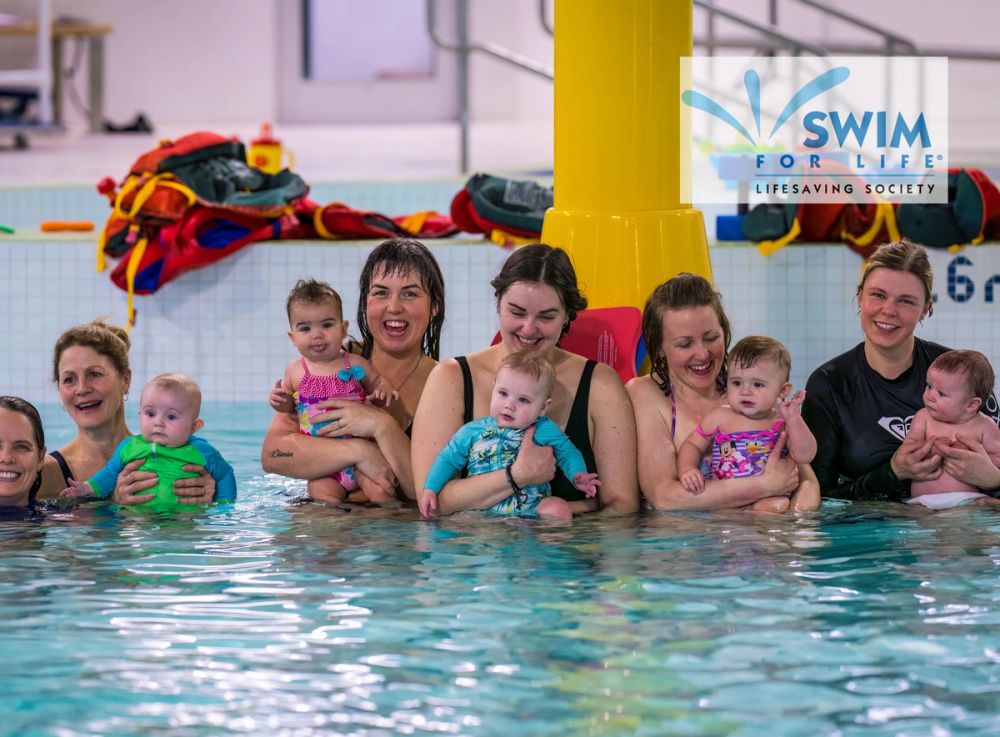
At least 4m but less than 100 PARENT & TOTParent & Tot program structures in-water interaction between parent and child to stress the importance of play in developing water-positive attitudes and skills. Activities and progressions are based on child development, so parents register in the level appropriate for their child's age. Targeted Water Smart drowning prevention messages are an integral part of the Swim for Life program. These messages are delivered in all Parent & Tot levels.PARENT & TOT 1 (4-12 MONTHS)Parents and babies will explore the water together under the watchful eyes of their instructor. They will learn how to safely enter and exit the water and work on getting ready to discover the water safely. Parents will learn how to safely support their child while they play.PARENT & TOT 2 (12-24 MONTHS)Instructors will lead sessions to help parents with children learn basic water safety skills in a welcoming environment. Parents are taught how to support their child with assisted entries and exits into water and support them in learning to float and kick. They can celebrate together when the child can get their face wet and blow bubbles for the first time.PARENT & TOT 3 (2-3 YEARS)Parents will work towards supporting their toddlers in becoming more independent in the water. Getting in, getting out, going under, and floating, parents and toddlers will be introduced to different iterations of these fundamental skills.Next Step: 0-2 years > Parent & Tot 1 & 2Next Step: 2-3 years > Parent & Tot 3
- Preschool
- Learn more and register
Preschool 1
At least 3 but less than 6 Preschool 1 introduces water safety and comfort while building confidence in the pool. Children learn assisted entries and exits, jump into chest-deep water, blow bubbles, and practice supported front and back floats and glides. Lifejacket skills and Water Smart® messages build early safety awareness.Next Steps: Learn to Swim -> Preschool 2 - Learn more and register
Preschool 2
At least 3 but less than 6 Preschool 1 introduces water safety and comfort while building confidence in the pool. Children learn assisted entries and exits, jump into chest-deep water, blow bubbles, and practice supported front and back floats and glides. Lifejacket skills and Water Smart® messages build early safety awareness.Next Steps: Learn to Swim -> Preschool 2 - Learn more and register
Preschool 4
At least 3 but less than 6Preschool 4 strengthens aquatic skills and stamina while promoting water safety. Swimmers jump into deep water, do sideways entries, tread in a lifejacket, and retrieve objects underwater. They glide on their side, practice flutter kicking on front, back, and side, and begin 5 m front crawl with Water Smart® safety tips.Next Steps: Learn to Swim -> Preschool 5 - Learn more and register
Preschool 4/5
At least 3 but less than 6Preschool 4 strengthens aquatic skills and stamina while promoting water safety. Swimmers jump into deep water, do sideways entries, tread in a lifejacket, and retrieve objects underwater. They glide on their side, practice flutter kicking on front, back, and side, and begin 5 m front crawl with Water Smart® safety tips.Next Steps: Learn to Swim -> Preschool 5 - Learn more and register
Preschool 5
At least 3 but less than 6Preschool 5 advances swimming skills and water safety. Swimmers practice forward roll entries in a lifejacket, tread for 10–20 seconds, submerge and recover objects, and complete sideways entries into deep water. They swim or kick 10 m, learn vertical whip kick, practice 5 m front and back crawl, and review Water Smart® safety tips.Next Steps: Learn to Swim -> Swimmer 1 at 6 years old
- Private Swim Lessons
- Learn more and register
Private Swim Lessons
At least 3 but less than 99PRIVATE LESSONSPrivate Swim lessons offer personalized, one-on-one instruction tailored to meet the unique needs and goals of swimmers of all ages. Whether you're a child learning basic water safety, a teen refining your strokes, or an adult looking to improve your technique, private lessons provide focused attention to help you progress at your own pace. With customized lesson plans and individualized feedback, these sessions are perfect for anyone seeking a flexible and personalized learning experience in the water. Please come to the first class ready to discuss with the instructor what skills you want to improve upon.Next Steps: TBD
- Swim 2 Survive
- Learn more and register
Swim 2 Survive | Winter 2026
At least 6 but less than 99Swim 2 Survive teaches just the essentials needed to survive an unexpected fall into deep water-an important first step to being safe around water. The Swim 2 Survive program's flexible and simple design makes it ideal for camps, schools. and youth groups. Swim 2 Survive can meet even the tightest time frames and budgets. Basic Swimming ability is a requirement of any meaningful attempt to eliminate drowning in Canada. Swim 2 Survive defines the minimum swim skills needed to survive an unexpected fall into deep water. Because most drownings occur close to safety and most victims had no intention of going into the water.Swim 2 Survive is for swimmers aged 6 & above. Swim 2 Survive focuses on basic survival skills performed as a sequence of three Skills:1. ROLL into deep water2. TREAD water for one minute3. SWIM 50 Meters. - Learn more and register
Swim 2 Survive
At least 6 but less than 99Swim 2 Survive teaches just the essentials needed to survive an unexpected fall into deep water-an important first step to being safe around water. The Swim 2 Survive program's flexible and simple design makes it ideal for camps, schools. and youth groups. Swim 2 Survive can meet even the tightest time frames and budgets. Basic Swimming ability is a requirement of any meaningful attempt to eliminate drowning in Canada. Swim 2 Survive defines the minimum swim skills needed to survive an unexpected fall into deep water. Because most drownings occur close to safety and most victims had no intention of going into the water.Swim 2 Survive is for swimmers aged 6 & above. Swim 2 Survive focuses on basic survival skills performed as a sequence of three Skills:1. ROLL into deep water2. TREAD water for one minute3. SWIM 50 Meters.
- Swim Abilities
- Learn more and register
Swim Abilities | Age: 3 to 10
At least 3 but less than 16 SWIM ABILITIESSwim Abilities is a learn to swim program suitable for children with diverse needs. Certified instructors will provide lessons with a 4-level, progressive curriculum where the caregiver is in the water. This program will assist children and their caregivers to increase safety, independence, and enjoyment in and around the water. Swim Abilities lessons are best suited for children, aged 3-18 years, who would benefit from slower paced lessons with additional practice time and one-on-one safety supervision. Every child who does not yet fit into regular swim lessons is welcome in Swim Abilities. - Learn more and register
Swim Abilities | Age: 11 to 18
At least 3 but less than 16 SWIM ABILITIESSwim Abilities is a learn to swim program suitable for children with diverse needs. Certified instructors will provide lessons with a 4-level, progressive curriculum where the caregiver is in the water. This program will assist children and their caregivers to increase safety, independence, and enjoyment in and around the water. Swim Abilities lessons are best suited for children, aged 3-18 years, who would benefit from slower paced lessons with additional practice time and one-on-one safety supervision. Every child who does not yet fit into regular swim lessons is welcome in Swim Abilities. - Learn more and register
Swim Abilities | Age: 18 & Under
At least 3 but less than 16 SWIM ABILITIESSwim Abilities is a learn to swim program suitable for children with diverse needs. Certified instructors will provide lessons with a 4-level, progressive curriculum where the caregiver is in the water. This program will assist children and their caregivers to increase safety, independence, and enjoyment in and around the water. Swim Abilities lessons are best suited for children, aged 3-18 years, who would benefit from slower paced lessons with additional practice time and one-on-one safety supervision. Every child who does not yet fit into regular swim lessons is welcome in Swim Abilities.
- Canadian Swim Patrol
- Learn more and register
Canadian Swim Patrol - Rookie/Ranger
At least 10 but less than 99CANADIAN SWIM PATROL | 10+ YEARS- Enhances water capability and fitness with stride entries, underwater somersaults, eggbeater kicks, and timed swims (100–200 m). Participants practice swimming with clothes, surface dives, victim recognition, non-contact rescues, throwing assists, and first aid including primary assessment and EMS initiation.- The Rookie / Ranger Patrol prepares swimmers aged 10+ for lifesaving and advanced aquatic skills, focusing on endurance, water safety, and rescue techniques. Participants progress from foundational skills like head-up swimming, surface dives, and lifesaving kicks to advanced tasks, including carrying and supporting objects up to 4.5 kg, underwater swimming, and survival scenarios. Lifesaving training includes primary assessments, rescue breathing, treating shock, airway obstructions, and managing injuries like bleeding. Rescues involve recognizing victim types, towing weak or non-swimmers, and working with bystanders. Endurance builds with timed swims up to 200 m and workouts up to 400 m, ensuring preparedness for emergency situations. This series develops strong swimming, lifesaving confidence, and water safety awareness.New Change:Star Patrol has been combined with Bronze Star in order to build a strong foundation for future lifeguards. The combination of skill refinement, physical challenge, and applied lifesaving practice makes Star Patrol and Bronze Star and engaging and valuable step towards more advance certifications.Next Steps: Lifeguarding -> All Star, Bronze Medallion, Bronze Cross, National LifeguardNext Steps: Active Lifestyle -> Stroke Improvement***SKIP DATES: N.A******SKILLS DAY: Jan 14***Lesson 4 of each lesson set is SKILLS Day! We welcome swimmers to bring a friend/family member (16years+) to see the skills they are developing first-hand by participating in the water with the swimmers. Visitors will assist them with practicing what they have learned and have the opportunity to speak with the Instructor about your swimmers' progress and ask any questions you may have. - Learn more and register
Canadian Swim Patrol | Rookie
At least 10 but less than 99CANADIAN SWIM PATROL | 10+ YEARS- Enhances water capability and fitness with stride entries, underwater somersaults, eggbeater kicks, and timed swims (100–200 m). Participants practice swimming with clothes, surface dives, victim recognition, non-contact rescues, throwing assists, and first aid including primary assessment and EMS initiation.- The Rookie / Ranger Patrol prepares swimmers aged 10+ for lifesaving and advanced aquatic skills, focusing on endurance, water safety, and rescue techniques. Participants progress from foundational skills like head-up swimming, surface dives, and lifesaving kicks to advanced tasks, including carrying and supporting objects up to 4.5 kg, underwater swimming, and survival scenarios. Lifesaving training includes primary assessments, rescue breathing, treating shock, airway obstructions, and managing injuries like bleeding. Rescues involve recognizing victim types, towing weak or non-swimmers, and working with bystanders. Endurance builds with timed swims up to 200 m and workouts up to 400 m, ensuring preparedness for emergency situations. This series develops strong swimming, lifesaving confidence, and water safety awareness.New Change:Star Patrol has been combined with Bronze Star in order to build a strong foundation for future lifeguards. The combination of skill refinement, physical challenge, and applied lifesaving practice makes Star Patrol and Bronze Star and engaging and valuable step towards more advance certifications.Next Steps: Lifeguarding -> All Star, Bronze Medallion, Bronze Cross, National LifeguardNext Steps: Active Lifestyle -> Stroke Improvement***SKIP DATES: N.A******SKILLS DAY: Jan 14***Lesson 4 of each lesson set is SKILLS Day! We welcome swimmers to bring a friend/family member (16years+) to see the skills they are developing first-hand by participating in the water with the swimmers. Visitors will assist them with practicing what they have learned and have the opportunity to speak with the Instructor about your swimmers' progress and ask any questions you may have. - Learn more and register
Canadian Swim Patrol | Star
At least 10 but less than 99CANADIAN SWIM PATROL | 10+ YEARSThe Lifesaving Society's 3 level Canadian Swim Patrol program is for swimmers who are ready to go beyond learn-to-swim. The programs focus on developing strength and proficiency while introducing swimmers to the challenging world of lifesaving. Swimmers will have fun enhancing their capability in the water, increasing their physical conditioning, and learning lifesaving judgment. Each level will continue to develop swimmers' strokes and provide a skill foundation that will prepare them for success in the Society's Bronze Medal Awards. Each level of the Canadian Swim Patrol program has three modules: Water Proficiency, First Aid and Recognition and Rescue.Progression through this program is based on completion of skills at each level.
- Youth Swim Lessons
- Learn more and register
Swimmer 1
At least 6 but less than 12y 11m Swimmer 1 builds confidence in the water. Participants practice shallow entries and exits, jumps into chest-deep water, treading for 30 seconds, 5 m front crawl, submerging and exhaling, front and back floats, rolling front-to-back, 3 m glides, 5 m flutter kicks, and learn Water Smart® safety tips.Need Help? |Schedule a swim assessment to help determine what level to register in.Next Steps: Learn to Swim -> Swimmer 2 - Learn more and register
Swimmer 2
At least 13 but less than 99 ADULT SWIMMER | 13+ YEARSThe Adult Swimmer program helps beginners or those improving strokes achieve their goals. With a certified instructor, participants gain confidence, develop smooth strokes, improve water fitness, and learn Water Smart® safety. Skills and awards are adapted for adult learners’ needs and personal goals.Progression through this program is based on completion of skills at each level.ADULT 1Adult swimmers will work towards being able to complete short distance swims (10-15 m) on their front and back. They will work through swimming stroke fundamentals such as floats, rolls, glides, and kicks. Swimmers will develop their underwater skills as they continue to build their confidence in the water. ADULT 2Adult swimmers will practice different entries into deep water including dives, rolls, and tuck jumps (cannonballs). As they work on building strength and endurance, they will aim to be able to tread water for 1-2 minutes. New underwater skills are introduced such as handstands in shallow water and front somersaults (in water). Swimmers will achieve the Swim to Survive standard by being able to roll into deep water, tread water for 1 minute, and swim 50m. In addition to improving their front crawl, back crawl, and whip kick, swimmers will be introduced to breaststroke. ADULT 3Adult swimmers will work towards mastering front crawl, back crawl, and breaststroke. Challenging skills such as shallow dives, stride entries, and compact jumps will be completed as well as a focus on developing lifesaving kicks. Swimmers can expect to improve their fitness levels as they work on completing 300m workouts and 25-50 m sprints.Next Steps: Profession -> Bronze Star, Bronze Medallion, Bronze Cross, National Lifeguard, Swim InstructorNext Steps: Active Lifestyle -> Fitness Swimmer - Learn more and register
Swimmer 3
At least 6 but less than 12y 11m Swimmer 3 advances water skills with kneeling dives, forward roll entries, 30-second treading, handstands, and front somersaults. Participants jump into deep water, swim or kick 25 m, practice flutter kicks front and back, whip kick 10 m, 15 m front and back crawl, interval training, and follow Water Smart® safety tips.Need Help? |Schedule a swim assessment to help determine what level to register in.Next Steps: Learn to Swim -> Swimmer 4 - Learn more and register
Swimmer 4
At least 6 but less than 12y 11m Swimmer 4 refines advanced skills with standing dives, 1-minute treading, 5 m underwater swims, and 25 m front and back crawl. Participants learn whip kick, breaststroke arms, complete the Canadian Swim to Survive® Standard, do 25 m sprints, 4 × 25 m interval training, and follow Water Smart® safety tips.Need Help? |Schedule a swim assessment to help determine what level to register in.Next Steps: Learn to Swim -> Swimmer 5 - Learn more and register
Swimmer 5
At least 6 but less than 12y 11m Swimmer 5 masters shallow dives, cannonball entries, eggbeater kicks, and in-water backward somersaults. They refine 50 m front and back crawl, 25 m breaststroke, complete 25 m sprints, and advanced interval training, with Water Smart® messages reinforcing water safety.Need Help? |Schedule a swim assessment to help determine what level to register in.Next Steps: Learn to Swim -> Swimmer 6
